With most jobs requiring a CV to begin the application process, it is so crucial to be able to write a CV correctly.
The workshop was ran by Clare Brass, who I don’t expect you to know, but has worked on shortlisting CV’s and so this workshop gave more of an insight into what employers look for than others that I have attended.
Shortlisting
Employers first tend to look for required qualifications, experience, skills and qualities, and then look at an understanding of the job/organisation, work ethic, enthusiasm and potential for the role.
CV Checklist
- Fit for purpose
- Good layout and formatting
- Relevant and targeted information
- Engaging language
- Impeccable attention to detail
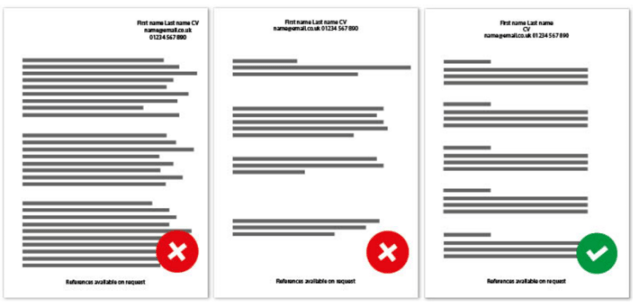
The wrongs and rights of CV formatting
As a bare minimum a CV should always contain personal details, academic qualifications, employment/work experience and referees.
As extras you can include skills, Achievements, interests, professional memberships and voluntary activities.
Education
When providing details of education, you should always state where you achieved each qualification.
The highest you have achieved should be at the top and the lowest at the bottom.
When it comes to things such as GCSE’s and sometimes A-Level’s, an employer doesn’t need to know every single qualification just the important ones: Maths and English, and any relevant ones depending on the job you are applying for.
Provide evidence for your skills
When stating any employment or volunteering you have done, do not just state what you have done.
Instead state what you have done but how this helped develop skills that are required for the position.
Skill based CV
This allows you to target your CV to a job without any direct qualifications or experience.
You have to give specific examples where you developed a skill.
Skill sub-headings according to the priorities of the post.
It is very important to include any work experience that you have done and link these back to the skills.
Academic CV
These tend to be used when applying for lecturing or research positions, such as post-doctoral research roles.
The whole CV focuses on academic achievements, but the information still has to be relevant.
These sort of CV’s have slightly different rules in that they contain more detail and additional sections so therefore there is no page limit.
My Thoughts
Although this was one CV workshop of may that I had attended and detailed the same sort of content there was a slight difference in this one. This was the perspective that Clare Bass gave having worked on the receiving end of CV’s. It was also very helpful to see examples of the different CV’s you would in different circumstances.
From now on I will write a CV that is tailored to the job I am applying to as opposed to just sending out a generic copy of my CV. Hopefully in doing this I will be able to secure more job interviews in the field I desire.
 Ryan Buttery: A Zoological Blog.