On the 30th November, Stuart Marsden from Manchester University gave a seminar on wildlife trade and sustainability in general and then discussed the subject more in depth with his work on the bird trade in Java, Indonesia.
The seminar began by the audience being shown several distressing images taken from the animal trade market.
We were asked to select only two that we would want to put an end to.

Slide shown by Stuart. Which two would you choose?
Within the seminar there was a wide range of opinions and arguments for each case.
This exercise showed how difficult it as to decide between the options, which can be applied to organisations that attempt to stop the illegal trading of wildlife highlighting the difficult decisions they have to make.
“Is it better to put all effort into one issue or to split it into several?”
Once the discussion had concluded, Stuart discussed each individual trade separately, talking about the importance of sustainability for each factor.
This is something the IUCN does not do. Instead they look at the cruelty of the trade or the animal in question.
However, judging sustainability is very hard to predict in some species due to a lack of population data to be used in a support harvest model.
Essentially scientists don’t know the population of certain animals exactly and they don’t know how many are being taken from the wild.
In fact it was suggested that in certain cases the best way to collect this data would be to work with the hunters as they clearly know the locations of these animals.
Stuart argued that hunters shouldn’t be demonised but instead offered jobs in order to help conservation efforts.
The area that Stuart works in works with birds in Java Indonesia.
In this culture it is an obligation for a man to have one or more songbird. Singing competitions involving these birds also occur.
Due to this there is a huge market with a survey estimating the sale of 14,000 birds in 4 days.
The market has a high mortality rate with some species even going extinct.
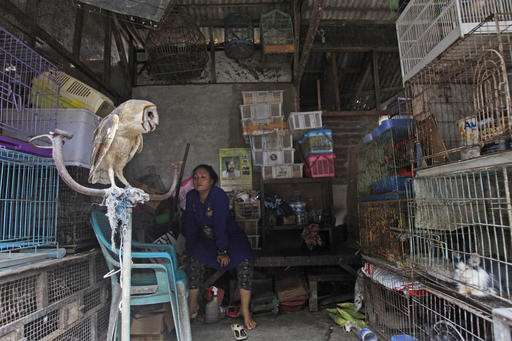
An example of the living conditions these birds have before being sold.
Stuarts conservation group, aims to reduce demand for these birds by doing 3 things:
- Identifying patterns of ownership
- Looking at motivations for owning the birds
- Identifying ways to change behaviour and attitudes
Overall this seminar gave me an insight on many issues of conservation that I had not even considered. It emphasised the importance of sustainability of conservation of which I had not yet considered. I had always assumed that all issues should at least have some attempt of being conserved, yet now I know that a decision has to be made on how viable these conservation efforts actually are. With this in mind it also gave way to some insight on the decision process that organisations and companies go through when deciding what to conserve.
This was the second seminar that has piqued my interest in conservation and quite possibly just these two have led me to consider a career in this field. From here it is just a matter of what aims I would like to have. As seen today there is a wide range of species that require attention with it being very difficult to choose between them all.
 Ryan Buttery: A Zoological Blog.